
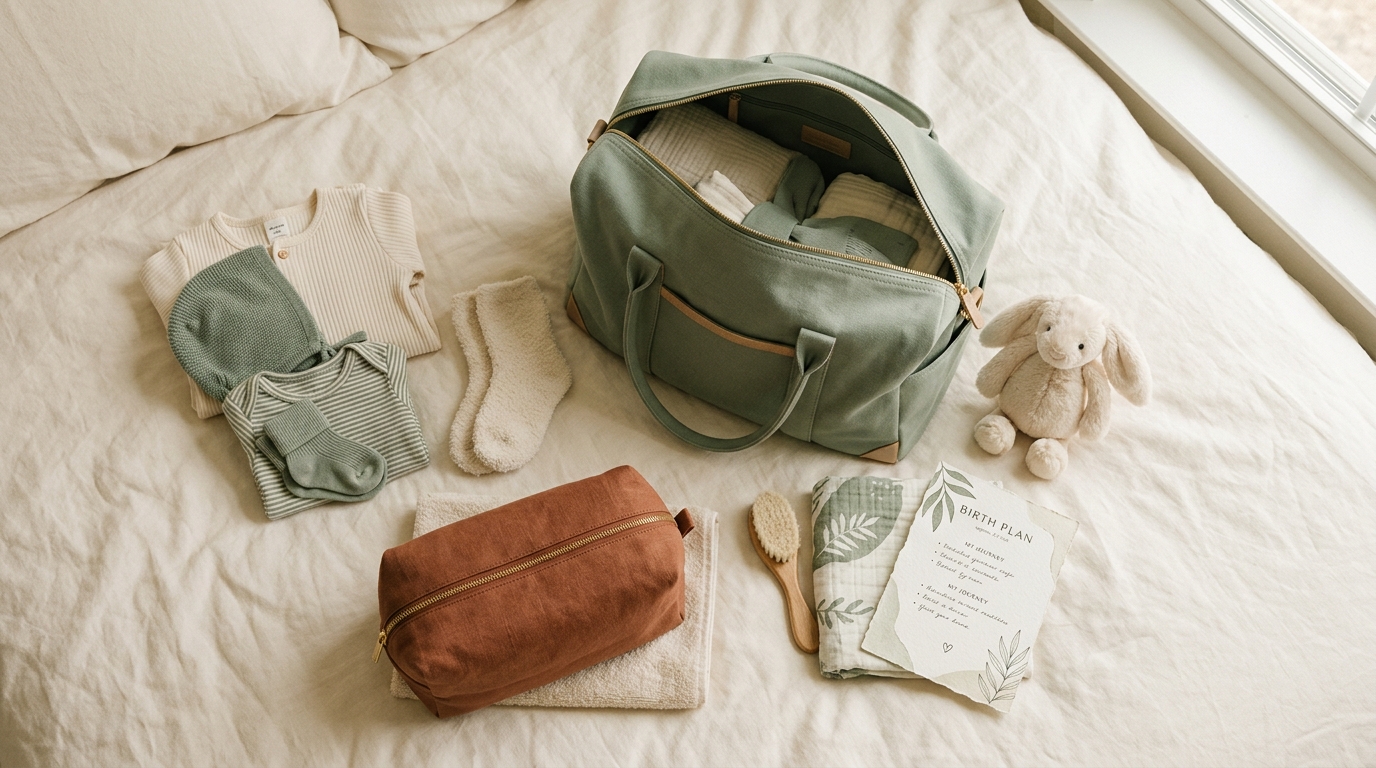
You’ve been staring at hospital bag checklists on Pinterest that include 47 items, a ring light, matching robes, and something called a “labor playlist curated by trimester.” Meanwhile, you’re 35 weeks pregnant, your back hurts, and you just want someone to tell you what actually matters.
Consider this that list.
We talked to parents who’ve recently been through labor and delivery, consulted with L&D nurses, and cross-referenced every overpacked Instagram bag with the reality of what you’ll actually use in a hospital room. The result: a straightforward checklist that covers what you need, what’s nice to have, and what you can leave at home — because the hospital provides more than you think.
When to Pack Your Hospital Bag
Pack your bag between weeks 35 and 37. If you’re high-risk or your provider has mentioned the possibility of early delivery, aim for week 33 or 34.
Here’s why earlier is better: about 10% of babies arrive before their due date. You do not want to be throwing things into a duffel bag between contractions at 3 AM. Pack it, put it by the door, and forget about it until go time.
Pro tip: Pack a separate “first stage” bag with items you’ll want during active labor, and a larger bag with recovery and going-home items. That way you’re not digging through a suitcase while trying to breathe through contractions.
The Non-Negotiables (Don’t Leave Home Without These)
These are the items every person needs regardless of birth plan, hospital, or personal style:
Documents and Logistics
- [ ] Photo ID and insurance card — the hospital will ask for these at check-in
- [ ] Hospital pre-registration paperwork (if required — many hospitals let you pre-register online)
- [ ] Birth plan or preferences sheet (one page, max — more on this in our birth plan guide)
- [ ] Phone and charger — you’ll use your phone way more than you think (timing contractions, texting updates, middle-of-the-night Googling, taking a million photos)
- [ ] A long charging cable (6+ feet) — hospital outlets are never where you need them
- [ ] Car seat, properly installed — the hospital will not let you leave without one. Install it before you go into labor. Not during. Before.
For Labor and Delivery
- [ ] Lip balm — hospitals are dry, and if you’re breathing through your mouth during labor, your lips will crack. This sounds minor. It is not. Every L&D nurse we talked to listed this in their top 5.
- [ ] Hair ties and/or headband — you want your hair out of your face during labor, period
- [ ] Warm socks with grips — hospital floors are cold, hospital socks are thin. Bring your own. The grip part matters because you may be walking the halls during early labor, and nobody wants to slip
- [ ] Your own pillow (in a non-white pillowcase so it doesn’t get mixed in with hospital linens) — hospital pillows are flat and covered in plastic
- [ ] Glasses or contacts — if you wear them, pack them. You want to see your baby being born
For Recovery
- [ ] Comfortable going-home outfit — think elastic waistband, soft fabric, easy to pull on. You’ll still look about 6 months pregnant when you leave. Leggings or joggers with a loose top are the standard play
- [ ] Nursing bra or comfortable bralette — even if you’re not planning to breastfeed, your chest will need support
- [ ] Underwear you don’t care about — dark-colored, roomy, high-waisted. The mesh underwear the hospital provides is honestly great, but bring backup. Some people swear by disposable postpartum underwear (Frida Mom makes popular ones)
- [ ] Basic toiletries — toothbrush, toothpaste, deodorant, face wash, dry shampoo. Hotels aren’t the only places where you’ll want your own products. You will not wash your hair for days and that’s fine
For Baby
- [ ] Going-home outfit — one outfit in newborn size AND one in 0–3 months (because newborn sizing is a guess until the baby is here)
- [ ] Swaddle blanket or bunting for the car seat — weather-appropriate for the ride home
- [ ] Snap or zip onesies for the hospital stay — 2 to 3 is plenty. Hospitals provide basic shirts and blankets, but you might want your own
The “Worth Packing” List (Nice but Not Critical)
These items make the hospital stay more comfortable but won’t cause a crisis if forgotten:
Comfort Items
- [ ] Your own towel — hospital towels are thin and scratchy. If you want a real shower experience after delivery, bring one from home
- [ ] Robe or zip-up hoodie — easier than a hospital gown for skin-to-skin contact and moving around the room. Choose something you can open from the front
- [ ] Shower shoes or flip flops — for the hospital shower. You’ve been warned
- [ ] Eye mask and ear plugs — hospitals are loud. Vital signs get checked at all hours. Roommates (if you’re not in a private room) exist. Sleep is already scarce; give yourself every advantage
- [ ] Nursing pillow — if you plan to breastfeed, this makes positioning so much easier in those early feeds. The hospital will have regular pillows, but a Boppy or My Brest Friend can be worth the bag space
- [ ] Nipple cream — if breastfeeding, your nipples will likely get sore fast. Lanolin or an organic nipple balm (Motherlove and Earth Mama make popular ones) applied between feeds can help. The hospital lactation consultant may provide some, but having your own means you’re not waiting
Entertainment and Emotional Support
- [ ] Snacks — labor can take a long time, and hospital food has a reputation for a reason. Pack protein bars, trail mix, dried fruit, crackers, honey sticks, or whatever sounds good to future-you. Your partner will also need to eat, and the cafeteria closes
- [ ] Water bottle with a straw — hydration matters enormously during and after labor. A straw is key because you might be lying down or in positions where tipping a bottle isn’t happening
- [ ] Book, magazine, or downloaded shows — early labor can involve a lot of waiting. Hospital WiFi is not Netflix-reliable
- [ ] Bluetooth speaker (small) — for music during labor, if that’s your thing. Keep the volume considerate
- [ ] Something meaningful — a photo, a letter, a memento from a loved one. Labor is intense. Having something grounding can help
For the Photo-Conscious
- [ ] Outfit for baby’s first photos — if matching-family-in-the-hospital-bed photos are important to you, plan ahead. Most people don’t care in the moment, but some do, and that’s perfectly valid
- [ ] Portable phone charger / power bank — because you’ll be taking 400 photos and your phone will die
What to Pack for Your Partner or Support Person
Your birth partner needs their own bag. Here’s what goes in it:
- [ ] Change of clothes (at least one full outfit, ideally two) — labor can last 12+ hours. Your partner might get various fluids on them. Layers are smart
- [ ] Comfortable shoes — they’ll be standing, walking, and possibly supporting your weight
- [ ] Toiletries — deodorant, toothbrush, face wash
- [ ] Phone and charger
- [ ] Cash or card — for vending machines, cafeteria, parking
- [ ] Snacks — plural, substantial snacks. Nobody’s at their best when hungry during a high-stress situation
- [ ] Entertainment for waiting — book, tablet, headphones (for when you’re resting or in early labor)
- [ ] Pillow and light blanket — the partner chair/couch in hospital rooms is not designed for comfort
- [ ] A positive attitude and patience — not packable, but worth mentioning
What to Leave at Home
This is where most hospital bag lists go off the rails. Here’s what the hospital provides or what you genuinely don’t need:
The Hospital Usually Provides:
- Diapers and wipes for baby (for your entire stay)
- Newborn hats and swaddle blankets
- Disposable mesh underwear for you (surprisingly beloved)
- Maxi pads for postpartum bleeding
- Peri bottle (the squirt bottle for cleaning after delivery — game changer)
- Ice packs and witch hazel pads for perineal care
- Basic nursing supplies if breastfeeding
- Formula if needed
- Medications as prescribed
- Sitz bath supplies (some hospitals)
Skip These:
- ❌ Your entire wardrobe — you need 1–2 outfits, max. You’ll mostly be in a hospital gown or robe
- ❌ Expensive jewelry — leave it home. Things get lost in hospitals
- ❌ A giant duffel bag — one medium bag + one small labor bag is ideal. You’re not moving in
- ❌ White or light-colored anything — postpartum bleeding is no joke. Dark colors are your friend
- ❌ Books about labor — if you haven’t read them by now, you’re not going to read them between contractions
- ❌ An aromatherapy diffuser — most hospitals don’t allow them (fire hazard, shared spaces). Essential oil roller balls or a scented hand lotion are alternatives
- ❌ A birth ball — most hospitals have them. Call ahead to confirm rather than lugging yours in
- ❌ A ring light — unless you’re a content creator by profession, please leave this at home
The Printable Checklist
Here’s everything in one clean list you can print, screenshot, or tape to your fridge:
🏥 Must-Have: Documents & Logistics
- Photo ID + insurance card
- Pre-registration paperwork
- Birth preferences (1 page)
- Phone + extra-long charger
- Installed car seat
🤰 Must-Have: Labor & Delivery
- Lip balm
- Hair ties / headband
- Grip socks
- Your own pillow (non-white case)
- Glasses / contacts
💊 Must-Have: Recovery
- Going-home outfit (elastic waist)
- Nursing bra / bralette
- Dark, roomy underwear
- Basic toiletries (toothbrush, deodorant, face wash, dry shampoo)
👶 Must-Have: Baby
- Going-home outfit (newborn + 0–3 months sizes)
- Swaddle / blanket / bunting
- 2–3 onesies (snap or zip)
✨ Nice-to-Have
- Your own towel
- Robe or zip hoodie
- Shower shoes
- Eye mask + ear plugs
- Nursing pillow + nipple cream
- Snacks (lots)
- Water bottle with straw
- Entertainment (downloads > WiFi)
- Small speaker
- Portable phone charger
🧑 Partner’s Bag
- Change of clothes (×2)
- Comfortable shoes
- Toiletries
- Phone + charger
- Cash / card
- Snacks
- Pillow + light blanket
- Entertainment
A Few Final Tips from Parents Who’ve Been There
“Pack less than you think.” Almost every parent we talked to said they overpacked. The hospital provides more than you expect, and you can always send someone home for forgotten items.
“The snacks were the MVP.” More parents mentioned snacks as the most important item than any other single thing on their list.
“I wore the same outfit for three days and did not care.” The bar for personal presentation drops to zero once you’ve given birth. This is not the time for a curated aesthetic. This is the time for the softest pants you own.
“Bring a nightlight.” A few parents mentioned this — something dim enough to see by during nighttime feeds without turning on the overhead fluorescent lights.
“Test the car seat before you go.” Install it. Practice buckling it. Make sure you know how it works. You do not want to figure this out in the hospital parking lot with a screaming newborn.
“I wish someone had told me to pack for a potential C-section.” If your birth plan changes and you end up with a C-section, you’ll want high-waisted, very soft underwear and pants that don’t hit your incision line. Packing one pair of high-waisted recovery underwear just in case is smart.
When It’s Go Time
Your bag is packed. The car seat is installed. The charger is extra-long.
Now you wait. (The fun part.)
When labor starts — whether it’s a dramatic water-breaking moment or a slow build of contractions over hours — grab the bag, grab your partner, and go meet your baby.
Everything else? You’ll figure it out. Parents have been doing this since the beginning of humans, and most of them packed even less than you.
You’re ready.
Want a downloadable PDF version of this checklist? Sign up for the Expectant newsletter and we’ll send it straight to your inbox — along with weekly guides, honest product picks, and the kind of pregnancy content that actually helps.
This article is for informational purposes only and does not replace professional medical advice. Always consult your healthcare provider with questions about your pregnancy.
Read more from Expectant: